In a groundbreaking move for the Telugu film industry (TFI), a court order has temporarily disabled user ratings and reviews for Megastar Chiranjeevi’s highly anticipated film Mana Shankara Vara Prasad Garu on popular ticketing platform BookMyShow. The directive, issued just days before the movie’s scheduled Sankranti release on January 12, aims to curb organized negative campaigns and fake reviews that could sabotage its box office performance. This unprecedented step highlights the growing concerns over digital manipulation in cinema, where fan rivalries and bot-driven attacks have become commonplace.
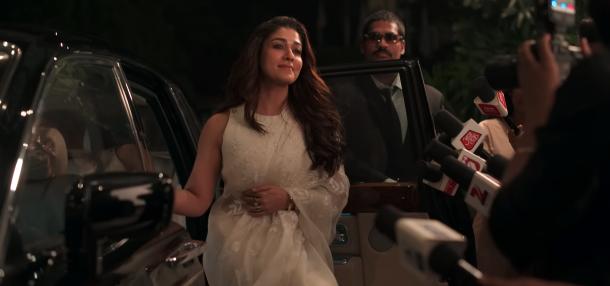
The film, directed by Anil Ravipudi and produced jointly by Shine Screens and Gold Box Entertainment, features Chiranjeevi in a lead role alongside Nayanthara and Daggubati Venkatesh. Billed as a family entertainer with elements of action and drama, Mana Shankara Vara Prasad Garu has generated significant buzz, especially in overseas markets like North America, where advance bookings have reportedly crossed the $1 million mark. However, pre-release negativity on social media platforms prompted the producers to seek legal intervention.
According to court documents and statements from the production team, the order restricts reviews to verified ticket holders only, preventing non-viewers from posting ratings. This measure was facilitated by anti-piracy firms BlockBIGG and Aiplex, who assisted in filing the petition. A notice on BookMyShow now reads: “Reviews and ratings for Mana Shankara Vara Prasad Garu have been disabled following a court order.” The platform complied immediately, marking the first such instance in TFI, though similar restrictions have been imposed on Kannada films like The Devil, Mark, and 45 to combat paid positive or negative reviews.
The rationale behind the plea stems from a pattern of “deliberate negative publicity” observed in recent releases. Industry insiders point to fan wars between supporters of major stars, where coordinated efforts flood review sites with one-star ratings or inflammatory comments before a film even hits theaters. For Mana Shankara Vara Prasad Garu, early social media chatter included unsubstantiated claims of weak scripting and overhyping, allegedly fueled by rivals. “Films today face an invisible enemy in the form of bots and trolls,” said a source close to the production. “This court order ensures that genuine audience feedback prevails, not manufactured hate.”
The decision has sparked a heated debate online. On platforms like X (formerly Twitter), users have mixed reactions. Some applaud it as a necessary shield against “digital terrorism,” while others criticize it as an attempt to muzzle free speech. One X post from journalist Sandeep Erukala noted the producers’ broader legal battles, including a petition to the Telangana High Court for ticket price modifications. Critics argue that blocking ratings on one site won’t stop backlash elsewhere—YouTube, Instagram, and WhatsApp remain open forums. “If the content is strong, no review ban is needed,” tweeted a film analyst, echoing sentiments that the move signals underlying insecurity about the film’s quality.
This isn’t the only legal hurdle for Mana Shankara Vara Prasad Garu. In a separate development, the Telangana High Court registry rejected an urgent hearing on a plea for ticket price hikes. Producers, alongside those of Prabhas-starrer The Raja Saab, sought to overturn a December 9 single-judge order prohibiting increases. The court deferred the matter, leaving it to the state government. On January 10, the Telangana government issued a Government Order (GO) permitting enhanced rates: an additional Rs 50 for single-screen theaters and Rs 100 for multiplexes during the Sankranti period. This boost is expected to help recover the film’s reported Rs 200 crore budget, amid competition from other releases like The Raja Saab and potential Tamil crossovers.
The ticket pricing saga underscores the economic pressures on big-budget films. Sankranti, a major festival season in South India, sees fierce competition for screens and audiences. Chiranjeevi’s star power, combined with the film’s promotional blitz—including trailers highlighting family values and high-octane sequences—positions it as a frontrunner. Overseas success, particularly in the US, where Telugu cinema has a strong diaspora following, could set new benchmarks if the domestic run matches hype.
Public reaction on X reflects the polarized views. A search for “Mana Shankara Vara Prasad Garu court order” yields posts praising the anti-negativity stance, with one user stating, “Finally, a way to stop fake reviews ruining good movies!” Others question transparency: “Why fear ratings if the film is a hit?” The Times of India Hyderabad account reported on the High Court proceedings, noting the producers’ push for flexible pricing to maximize earnings during the holiday rush.
Industry experts see this as a turning point. “Digital platforms have democratized opinions, but they’ve also weaponized them,” said a Mumbai-based film distributor. “Court interventions like this could become standard for star vehicles, but they risk alienating fans who value authentic discourse.” For now, the ban applies only to BookMyShow, but producers hint at pursuing similar orders for other sites if needed.
As Mana Shankara Vara Prasad Garu gears up for release, all eyes are on its opening day collections. Will the court order insulate it from preemptive strikes, or will word-of-mouth prevail regardless? Chiranjeevi, a veteran with over 150 films, remains optimistic, urging fans in a recent interview to experience the movie firsthand. “This is a story for every family,” he said. With the Sankranti clash heating up, the film’s fate will test whether legal safeguards can outmaneuver online chaos.
In the broader context, this episode raises questions about the intersection of cinema, technology, and law. As streaming and social media reshape audience engagement, filmmakers must navigate a landscape where a single viral post can make or break a project. For TFI, which contributes significantly to India’s entertainment economy, such measures could foster fairer competition—or stifle it. As debates rage, one thing is clear: the era of unchecked online influence may be waning.
Kadir is a box office reporter and film analyst based in Hojai, Assam, and the founder of Tenvow.com. Since 2015 he has covered theatrical collections and the business of film, with reporting that spans day wise box office figures, weekend performance, and wider release trends across India and the United States.